
Self Assessment After Bankruptcy: Why You May Need A New UTR
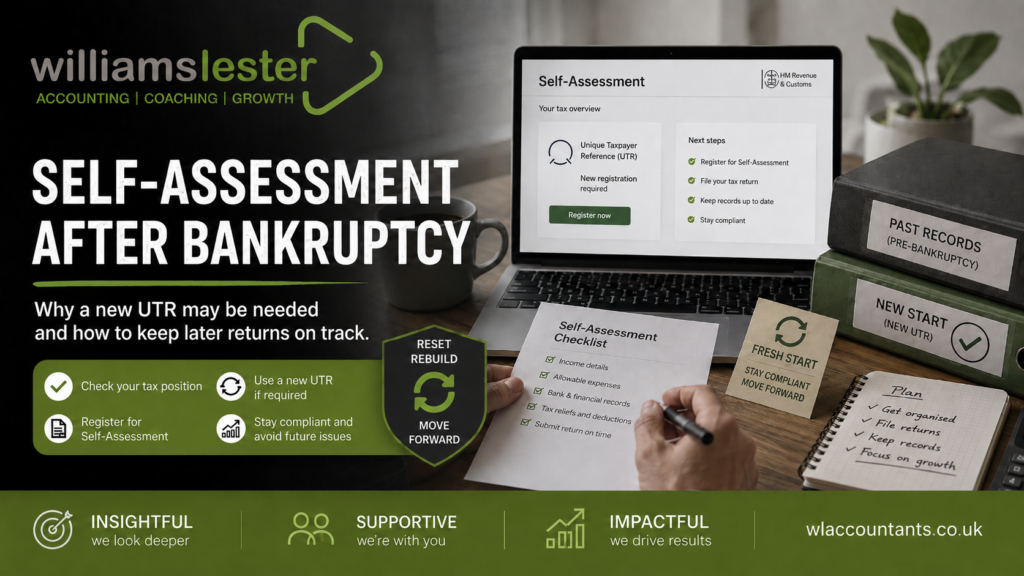
Bankruptcy can affect how Self Assessment records are handled. One point that is easy to miss is that the Unique Taxpayer Reference, or UTR, does not necessarily continue as normal after bankruptcy.
What happens to the old UTR?
Where a taxpayer has been made bankrupt, the UTR expires at the end of the tax year in which the bankruptcy occurred. That old UTR should still be used for Self Assessment returns for the tax year in which the person became bankrupt.
When is a new UTR needed?
A new UTR is needed if the person continues to trade after the end of the tax year in which they became bankrupt, or if they need to complete a Self Assessment tax return for any reason after that tax year.
Why HMRC separates the records
Using separate UTRs allows HMRC to keep the pre-bankruptcy and post-bankruptcy tax affairs separate. This helps ensure later returns are processed correctly and reduces the risk of administrative confusion.
What if the wrong UTR is used?
Using the old UTR for a post-bankruptcy return can delay processing because HMRC may need to correct the record. That can create avoidable correspondence and slow down the taxpayer’s affairs.
Practical next step
If bankruptcy has occurred and Self Assessment will continue, the taxpayer should re-register for Self Assessment and obtain a new UTR for later tax years.
| Call to action: Need help sorting Self Assessment records after bankruptcy? We can help you understand what needs to be filed and under which UTR. |