
July Payments On Account: Should You Pay, Reduce Or Review?
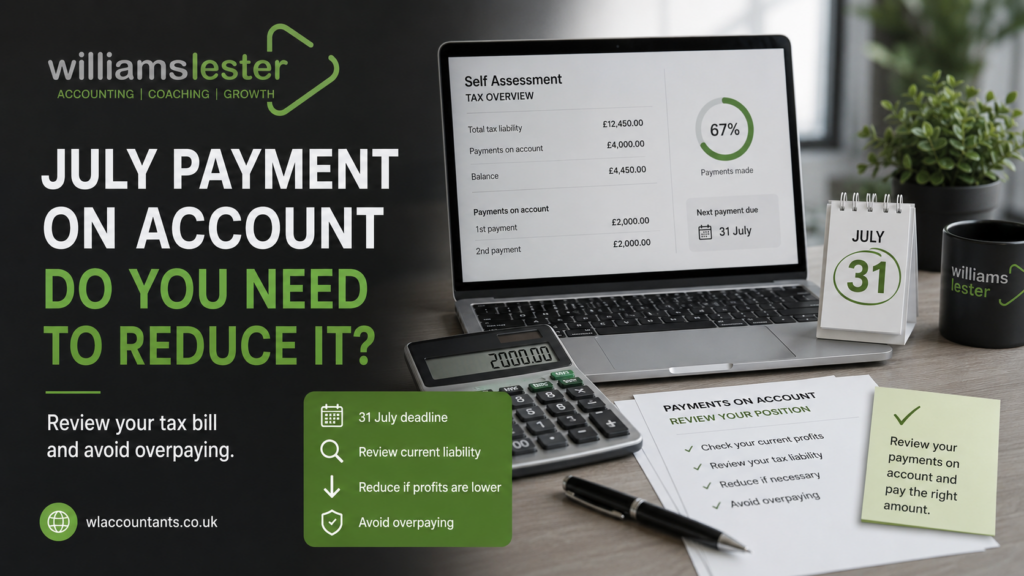
The 31 July payment on account can catch people out, particularly if profits have fallen or cash flow is tight. Before paying automatically, it is worth checking whether the amount still reflects your likely tax position.
What are payments on account?
Payments on account apply to many people in Self Assessment. Broadly, if your previous year’s tax and Class 4 National Insurance bill was £1,000 or more, you may need to make advance payments towards the next year’s bill. There is an exception where more than 80% of your tax was collected outside Self Assessment, for example through PAYE.
How the amounts are calculated
Each payment on account is normally 50% of the previous year’s tax and Class 4 National Insurance liability. One payment is due by 31 January during the tax year and the second is due by 31 July after the tax year. Any remaining balance is then due by the following 31 January.
Why July is a good time to review
By the time the July payment is due, the relevant tax year has ended. That means your actual profit or income position may already be known, or at least easier to estimate. If your income has fallen, your payments on account may now be too high.
Reducing payments on account
If you have a reasonable basis for believing your tax bill will be lower, you can ask HMRC to reduce your payments on account. This can be done online through your personal tax account by viewing your Self Assessment return and selecting the option to reduce payments on account. It can also be done by post using form SA303.
A word of caution
Do not reduce the payments too far. If the final tax bill is higher than the reduced payments, HMRC can charge interest on the shortfall. The key is to review the position properly rather than guessing.
| Call to action: Not sure whether your July payment is right? We can review the figures before you pay. |