Simple Assessments: What Are They And Why Has HMRC Sent One?
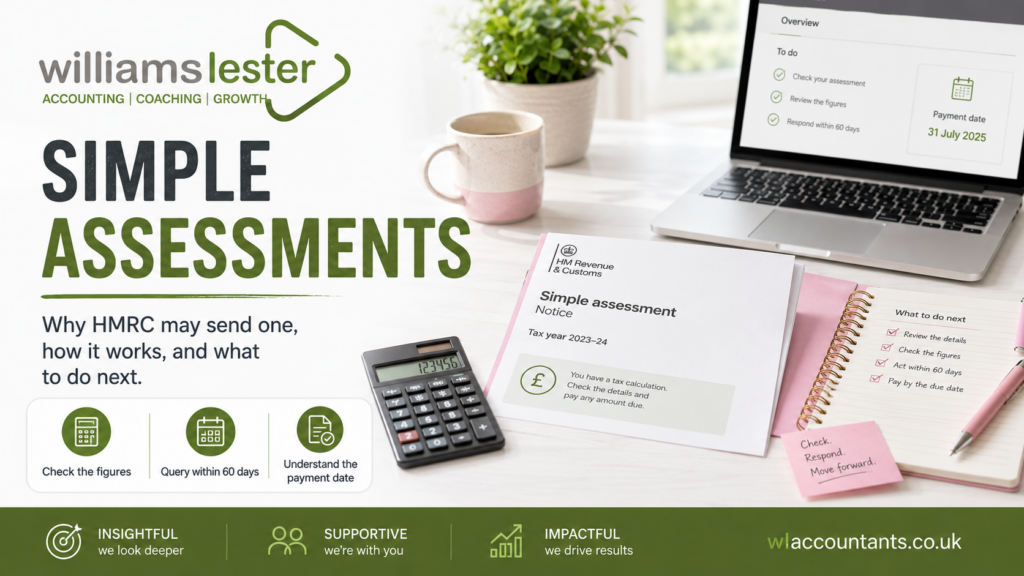
Some taxpayers are receiving letters from HMRC headed Simple Assessment.
For many people, this may come as a surprise, especially if they do not normally complete a tax return and have had little direct contact with HMRC before.
So what is a Simple Assessment, why might you receive one, and what should you do if you disagree with it?
What is a Simple Assessment?
A Simple Assessment is used where HMRC believes it already has enough information to calculate the tax due, but the tax cannot be collected automatically through PAYE.
Instead of asking the taxpayer to complete a full Self Assessment tax return, HMRC calculates the tax and sends an assessment showing the amount payable.
In other words, HMRC does the calculation and sends you the bill.
Who might receive one?
HMRC may issue a Simple Assessment where it believes there is tax to pay because of things like:
- underpaid tax from employment or pension income
- state pension income that has not been fully taxed
- multiple income sources where PAYE deductions were insufficient
- tax liabilities of £3,000 or more that cannot be collected through a tax code
- tax due after employment or PAYE income has stopped
HMRC uses information from employers, pension providers, the Department for Work and Pensions, banks and other organisations.
How is this different from Self Assessment?
The main difference is who provides the information and calculates the tax.
With Self Assessment, the taxpayer is responsible for declaring all relevant income, expenses, reliefs and allowances. HMRC then calculates the liability based on the return, unless the taxpayer calculates it themselves.
With Simple Assessment, HMRC uses information it already holds and issues the calculation directly.
You cannot choose to enter Simple Assessment. HMRC decides when to use it.
When are Simple Assessments issued?
HMRC usually starts issuing Simple Assessment calculations in the summer after the end of the tax year.
Because HMRC receives information from different sources at different times, it is possible for more than one assessment to be issued for the same taxpayer.
That is why it is important to read the letter carefully and check the figures.
What if the assessment is wrong?
If you disagree with a Simple Assessment, you can raise a query with HMRC.
This must normally be done within 60 days of the assessment being issued.
A query can be made by phone or in writing, explaining why you disagree with HMRC’s calculation.
If you are still unhappy after HMRC responds, you may be able to submit a written appeal within 30 days of HMRC’s final response.
When does the tax need to be paid?
The payment date depends on when the assessment is issued.
If the assessment for 2025/26 is issued before 31 October 2026, the tax is due by 31 January 2027.
If it is issued after 31 October 2026, payment is normally due within three months of the date on the assessment letter.
Why are more people receiving Simple Assessments?
Simple Assessments are not new, but HMRC is using them more widely.
Rising state pension payments and higher savings interest mean more people are being pushed above the frozen personal allowance.
This can create tax liabilities for people who previously had no tax to pay.
As HMRC expands its use of digital records and real-time reporting, more taxpayers are likely to receive Simple Assessments rather than being asked to complete a full tax return.
The key point
Do not ignore a Simple Assessment.
Check the figures, check the income included, check the payment date and act quickly if something looks wrong.
At williams lester accountants, we help clients understand HMRC letters, query incorrect assessments and make sure tax bills are right before they are paid.