Earning Over £60,000? You Could Be Paying More Child Benefit Tax Than You Need To
The High Income Child Benefit Charge can create unexpected tax bills for families, but changes to the way it is collected may make life easier. Understanding the rules could also help you make better financial decisions.
Child Benefit provides valuable financial support to families raising children.
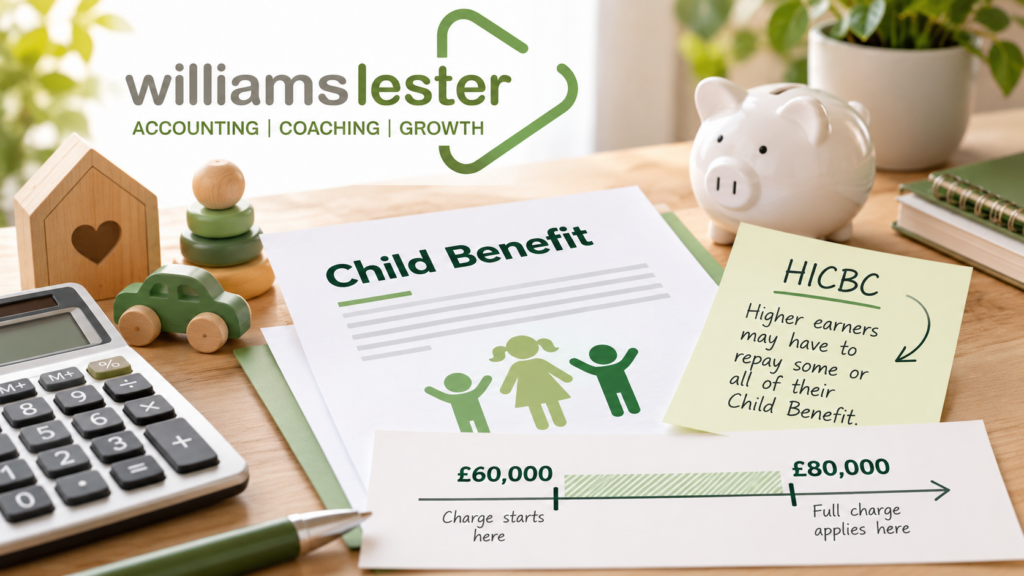
However, where one partner has income above a certain level, some or all of that benefit may effectively be withdrawn through the High Income Child Benefit Charge (HICBC).
For many families, the rules can be confusing.
The person responsible for paying the tax charge might not even be the person receiving the Child Benefit.
And while the rules previously meant many people had to register for Self Assessment solely to declare the charge, HMRC now offers an alternative collection method through PAYE.
How does the High Income Child Benefit Charge work?
For the 2026/27 tax year, the charge starts when an individual’s adjusted net income exceeds £60,000.
The charge increases as income rises.
For every £200 of adjusted net income above £60,000, 1% of the Child Benefit received is clawed back through the tax system.
Once adjusted net income reaches £80,000, the charge is equal to 100% of the Child Benefit.
The important point is that the calculation is based on individual income, not combined household income.
Example: Two families earning £100,000
Consider two households.
Family A
One parent earns £75,000 and the other earns £25,000.
Their combined income is £100,000.
Because one parent’s adjusted net income exceeds £60,000, the family may be liable to the High Income Child Benefit Charge.
Family B
Both parents earn £50,000.
Their combined income is also £100,000.
However, neither parent has adjusted net income above £60,000.
Assuming no other income or adjustments change the position, the family does not face the charge.
This difference often surprises people.
How much Child Benefit can you receive in 2026/27?
The weekly Child Benefit rates for 2026/27 are:
| Child | Weekly amount |
|---|---|
| Eldest or only child | £27.05 |
| Each additional child | £17.90 |
For a full 52-week period, this is approximately:
| Family | Annual Child Benefit |
|---|---|
| One child | £1,406.60 |
| Two children | £2,337.40 |
| Three children | £3,268.20 |
These figures illustrate the value of the benefit for a full 52-week period. Actual entitlement depends on the dates and circumstances of the claim.
Example: A parent earning £70,000
Imagine a family with two children receiving approximately £2,337 in annual Child Benefit.
The higher earner has adjusted net income of £70,000.
That is £10,000 above the starting threshold.
The High Income Child Benefit Charge would recover 50% of the benefit.
The resulting tax charge would be approximately £1,169.
If the parent’s adjusted net income reached £80,000, the charge would recover the full Child Benefit amount.
What counts as adjusted net income?
Adjusted net income is not necessarily the same as your gross salary.
It broadly starts with taxable income from all relevant sources and makes certain adjustments.
These can include deductions for qualifying pension contributions and Gift Aid donations.
This means two individuals with the same gross salary may have different adjusted net income figures.
For example, someone earning £65,000 might be able to reduce their adjusted net income through qualifying pension contributions.
Depending on the circumstances, this could reduce the High Income Child Benefit Charge.
However, the tax treatment of pension contributions depends on how the contributions are made.
Salary sacrifice arrangements, net pay pension schemes and relief-at-source contributions can have different effects on the calculation.
Professional advice can help determine the actual position.
Should you stop claiming Child Benefit if you earn £80,000?
Not necessarily.
Where the higher earner’s adjusted net income is £80,000 or more, the High Income Child Benefit Charge generally recovers the full amount of Child Benefit.
Some families therefore choose not to receive the payments.
However, there is an important distinction between not claiming Child Benefit and claiming it but opting out of the payments.
Claiming Child Benefit can provide National Insurance credits for an eligible parent or carer.
These credits can be valuable for someone who is not working or earning enough to build qualifying years towards their State Pension.
Simply failing to register for Child Benefit could mean missing out on those credits.
You can now pay the charge through PAYE
Previously, many parents had to register for Self Assessment purely because they were liable to the High Income Child Benefit Charge.
HMRC has introduced a service allowing eligible taxpayers to pay the charge through PAYE instead.
This means the charge can be collected through adjustments to the person’s tax code.
For eligible employees and pensioners, it can remove the need to complete an annual Self Assessment return solely because of Child Benefit.
Who can use the PAYE service?
To qualify, the taxpayer must generally:
- Not be required to submit a Self Assessment return for another reason.
- Be paying the charge for the current or previous tax year onwards.
- Register by the relevant deadline, generally 31 January following the tax year concerned.
For example, someone liable for the 2025/26 High Income Child Benefit Charge may be able to arrange PAYE collection if they register by 31 January 2027 and meet the eligibility conditions.
HMRC will then adjust their PAYE tax code.
What if you’re self-employed or a company director?
If you’re required to complete a Self Assessment tax return for another reason, the High Income Child Benefit Charge must generally be dealt with through that return.
This could apply to someone who has self-employment income or other circumstances requiring a return.
Being a company director does not, by itself, automatically mean you must complete Self Assessment.
However, directors who do need to file must include the charge through the Self Assessment process.
Five things families should check
If your income is approaching or exceeds £60,000, consider the following:
1. Check your adjusted net income
Don’t assume your headline salary is the figure used for the charge.
2. Review pension contributions
Qualifying pension contributions could affect the amount of Child Benefit you repay.
3. Consider National Insurance credits
The person claiming Child Benefit may benefit from credits towards their State Pension.
4. Check whether PAYE collection is available
You may not need to complete Self Assessment solely to pay the charge.
5. Review changes in income
Bonuses, dividends, rental profits or changes in employment can affect the calculation.
How williams lester accountants can help
At williams lester accountants, we help individuals and families manage their tax affairs and understand the implications of changes to income.
We can calculate potential High Income Child Benefit Charges, review adjusted net income, explain the treatment of pension contributions and help with Self Assessment obligations.
For company directors and business owners, we can also consider how remuneration decisions may affect personal tax liabilities.
Earning between £60,000 and £80,000?
The interaction between income, pensions and Child Benefit may be worth reviewing.
Speak to williams lester accountants to make sure you understand your position and the options available.
This article provides general guidance based on the High Income Child Benefit Charge rules and benefit rates for the 2026/27 tax year. Individual circumstances and adjusted net income calculations can affect the final liability.